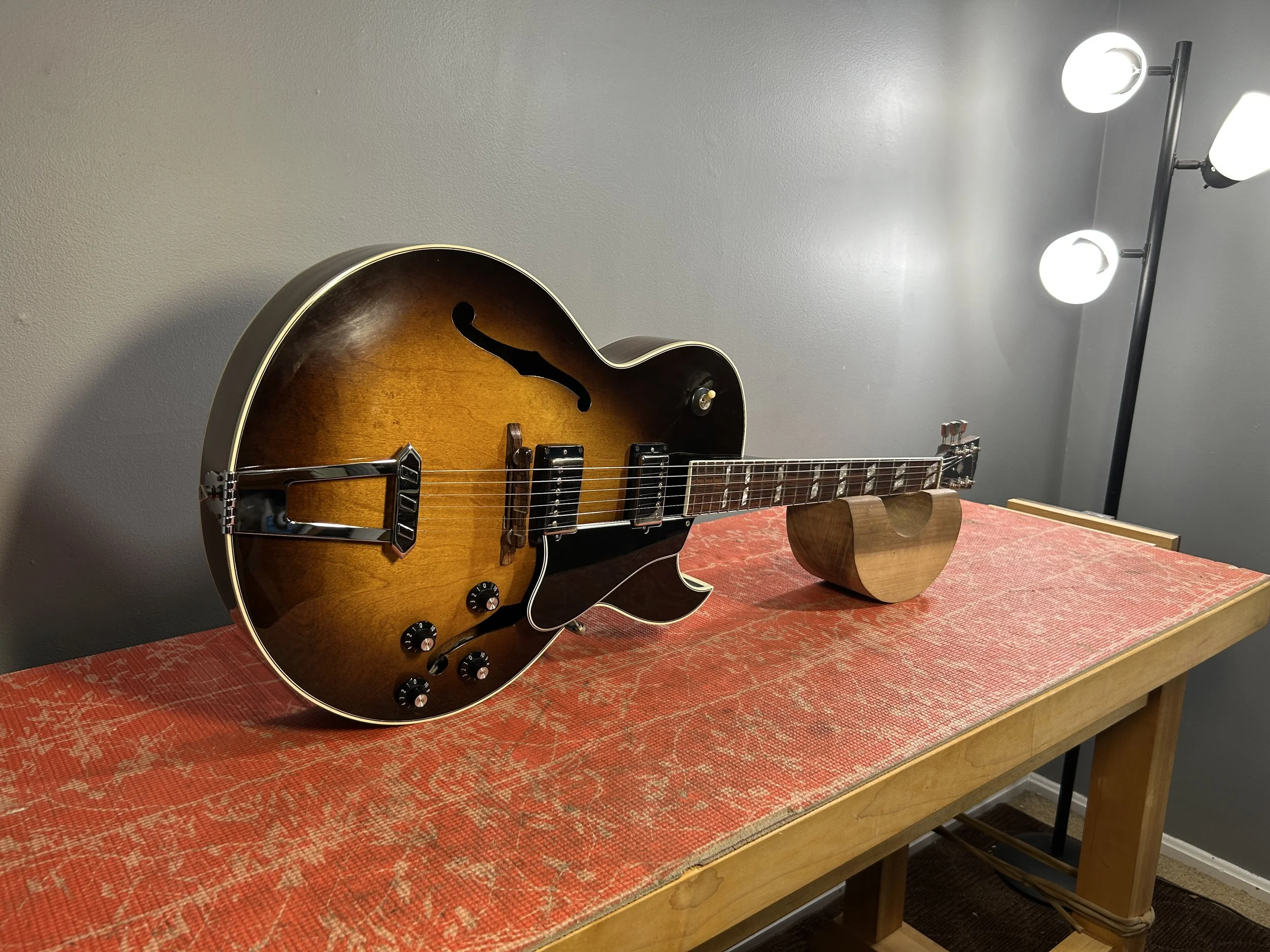
Premium Guitar Setups and Maintenance in Salem, NH
Optimize your instrument and prevent future issues with a premium Setup
Every Guitar Can Be Better
Brand new or used, all instruments will play, sound and feel better after a professional Setup. A careful inspection (the first step to a good Setup) can also spot issues that can become bigger and more expensive repairs if not attended to.
Most new instruments being sold are only (poorly) set up at the factory, not at the store. String action is intentionally left too high to prevent string buzz while on display (people may buy a guitar with overly high action, but not one that buzzes so much it is unplayable).
Used guitars become “out of whack” over time, even if they have been professionally set up in the past. They can also have hidden issues and other problems due to degradation, play wear and abuse or neglect.
A professional setups makes instruments better through a series of careful adjustments and maintenance. Your instrument is thoroughly inspected, adjusted, cleaned and sent on its way back to you, set up and refreshed.
Full Setup Walkthrough Video
The video below illustrates the steps I take to setup an intrument: From diagnosis, preparation, cleaning and polishing, the setup process, and post-setup testing.

Off-the-rack “Setups”: Only Good Enough to Sell a Product
Factory-made guitars are not set up to be as good as they can be. They are set up to play just well enough to be sold.
Most stores are not climate-controlled. Very humid summers and bone-dry winters cause wood to expand and contract, affecting string height and neck relief while instruments are on display or in storage.
Taking that into account, manufacturers intentionally set the action too high to give the strings plenty of room not to buzz like crazy once the weather changes (nobody buys unplayable instruments).
Aside from that, an instrument on display or sitting in a warehouse somewhere can have other issues:
Old and corroded strings
Poor intonation
Crackling pots, switches and input jacks
Unbalanced pickups
A SHL Premium Setup addresses all those problems and prevent larger repairs from being needed in the future.
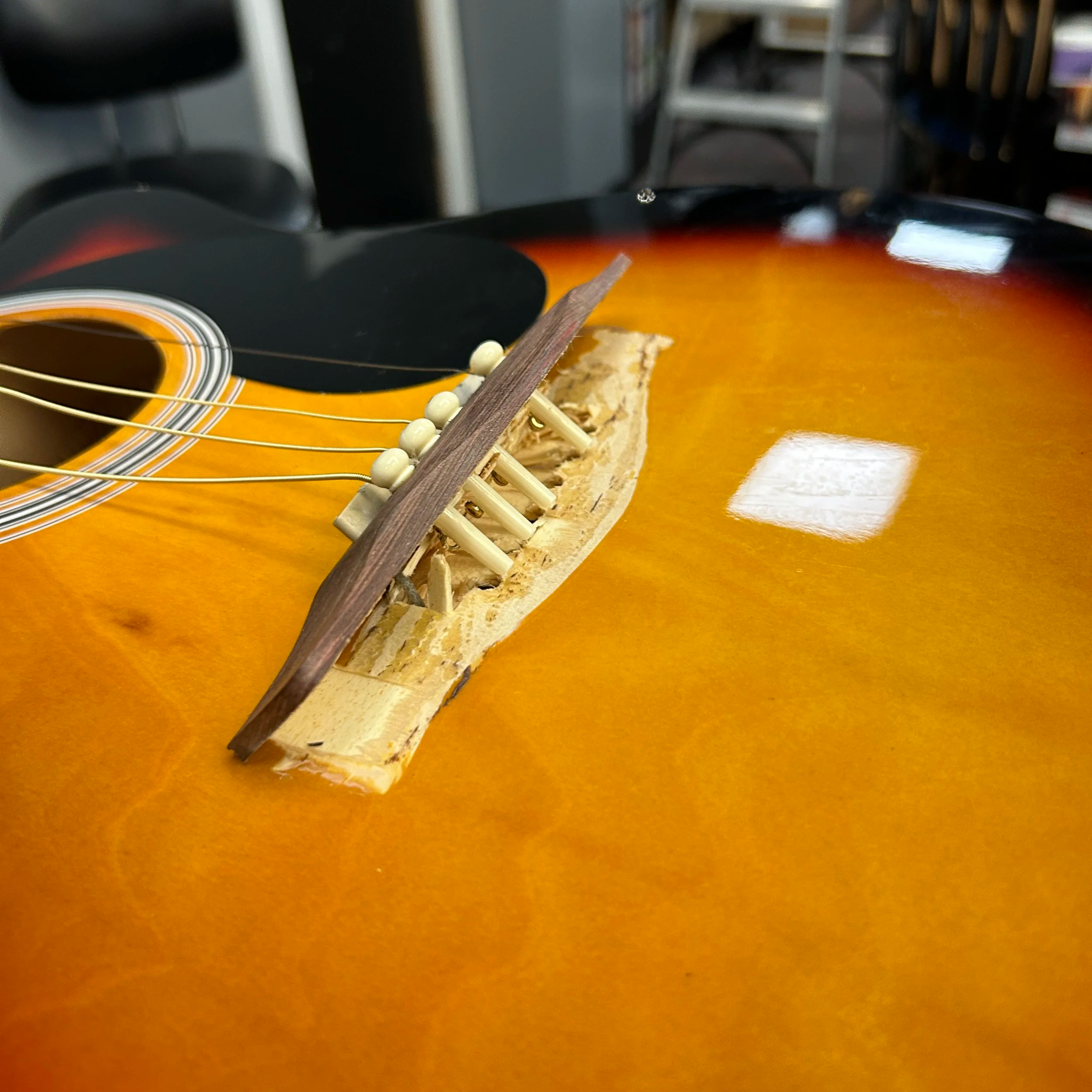
Assess, Address, Improve and Prevent
Just like how periodic visits to the doctor can bring hidden issues to light, a professional setup can help you spot problems that, when not addressed, can become bigger and more expensive repairs:
Unglued or broken internal braces can lead to warped tops or backs.
Hairline cracks can become larger and out of alignment.
Bridge lift on a guitar under string tension can damage a softwood top beyond repair.
The first step of a Stringhouse Lutherie Premium Setup is a rigorous, multi-point inspection which assesses the instrument as a whole, giving you a chance to tackle issues before it’s too late.
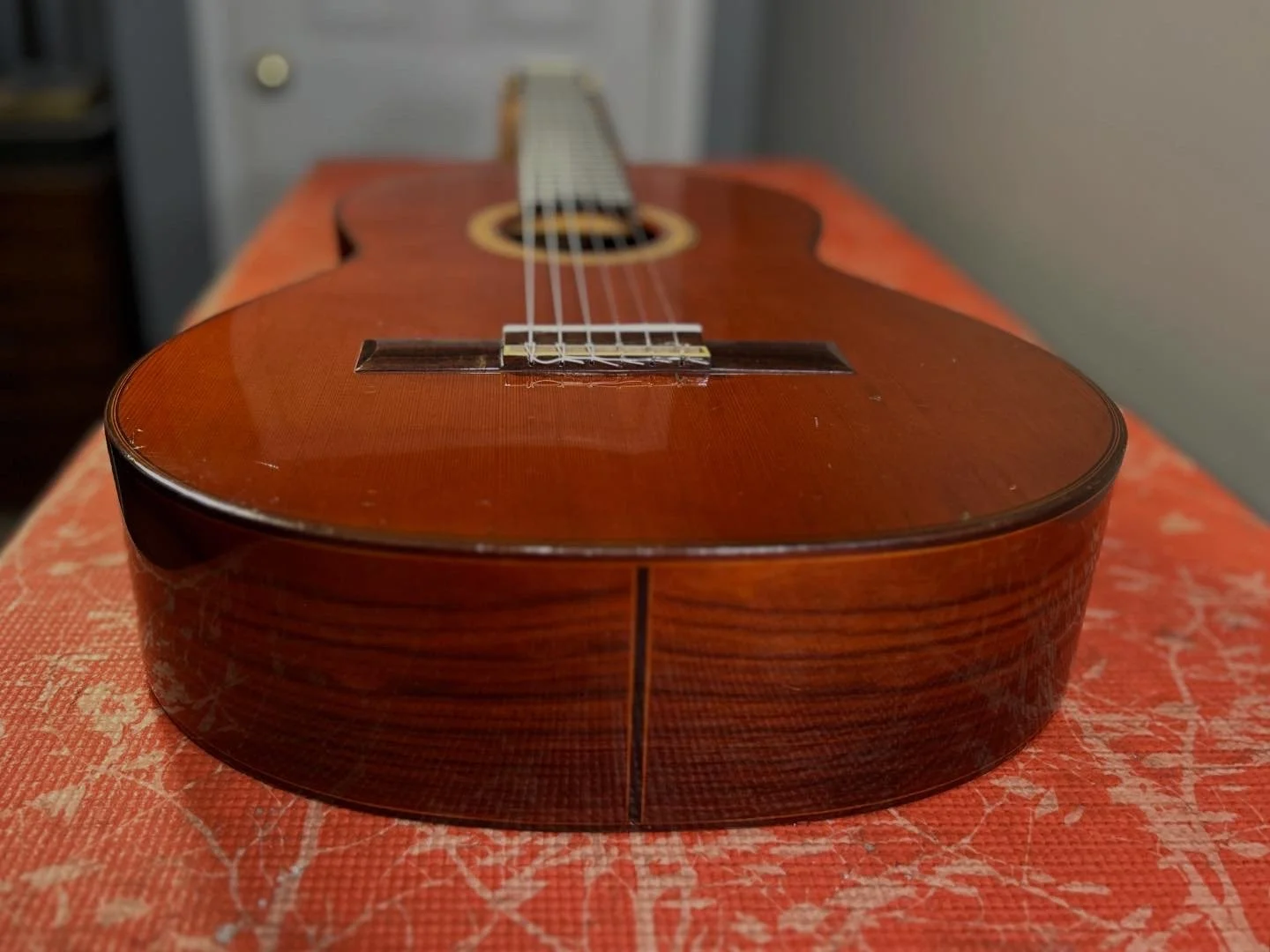
On a Knife’s Edge
A great Setup brings the best out of an instrument by performing careful adjustments at multiple points and in the correct order, while taking into account how they interact with each other.
Similar to the process of grinding, honing and polishing a knife to produce a sharp (but resilient) edge, a Setup aims at optimizing how the instrument performs and feels.
Neck relief is adjusted to take into account the “envelope path” of vibrating strings.
String height (at nut and 12th fret) is adjusted low enough to feel comfortable, but not so low strings will buzz excessively.
Frets are polished to remove dirt, oxidation and micro scratches.
Nut slots are cut properly and polished.
String-length compensation is set so the instrument plays in tune at open position and at the 12th fret (usually within 6 cents, or 6/100th of a semitone).
Pickups are balanced, tuning machines are oiled and the intrument is cleaned.
All screws and nuts are tightened and an electronic check and cleaning is performed.
It’s a multi-step process with adjustment that have to be performed in the correct order. A balancing act between feel, sound, performance and longevity.
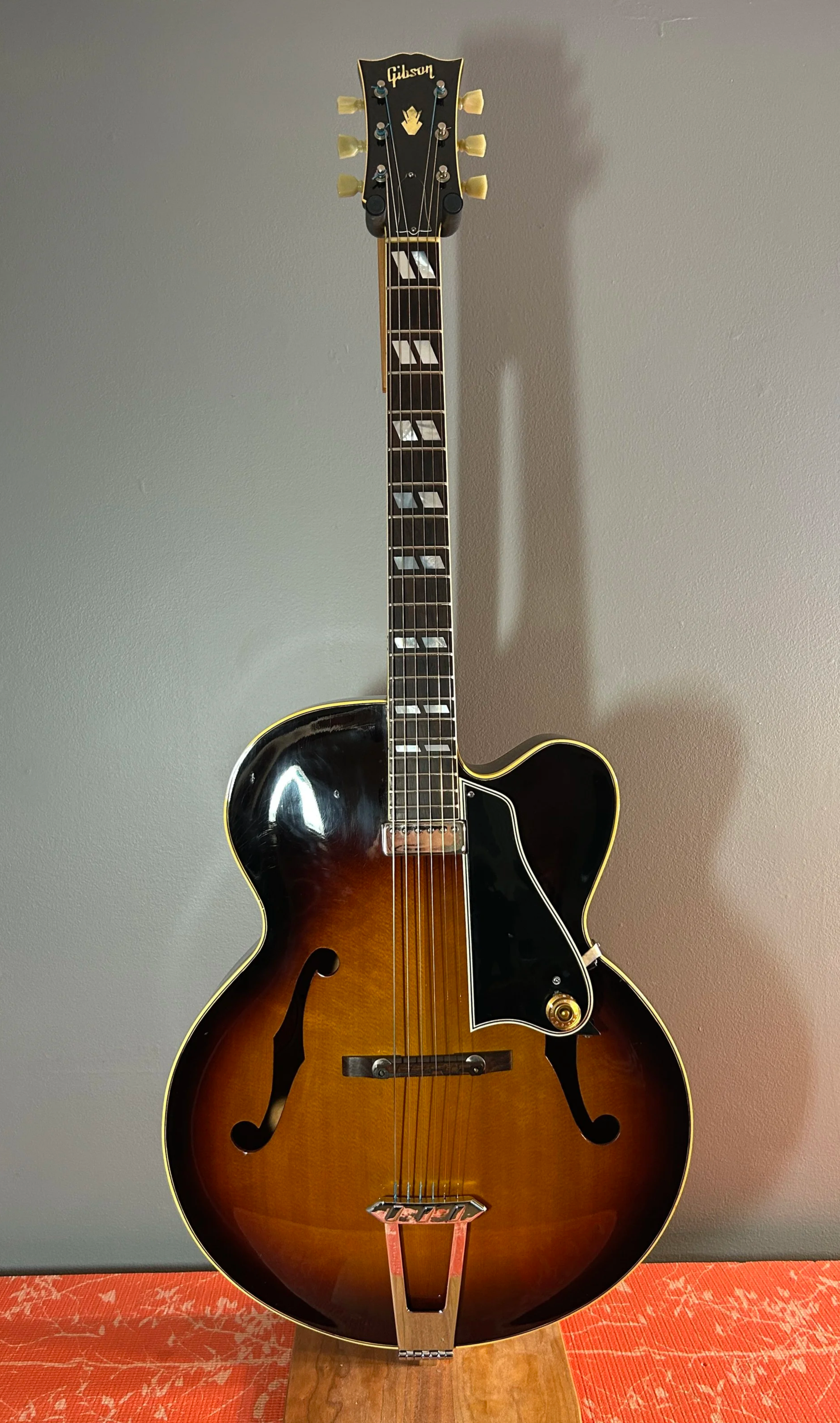
Why Make it Personal
Every instrument is unique, and every player has their own preferences and expectations.
Aiming at making each instrument the best it can be, an SHL Premium Setup takes into account a series of variables:
Your playing style
Choice of string gauge, brand and material
Scale length
Bridge type and configuration
Instrument condition and limitations
Get your instrument set up and find out how great it can really be!
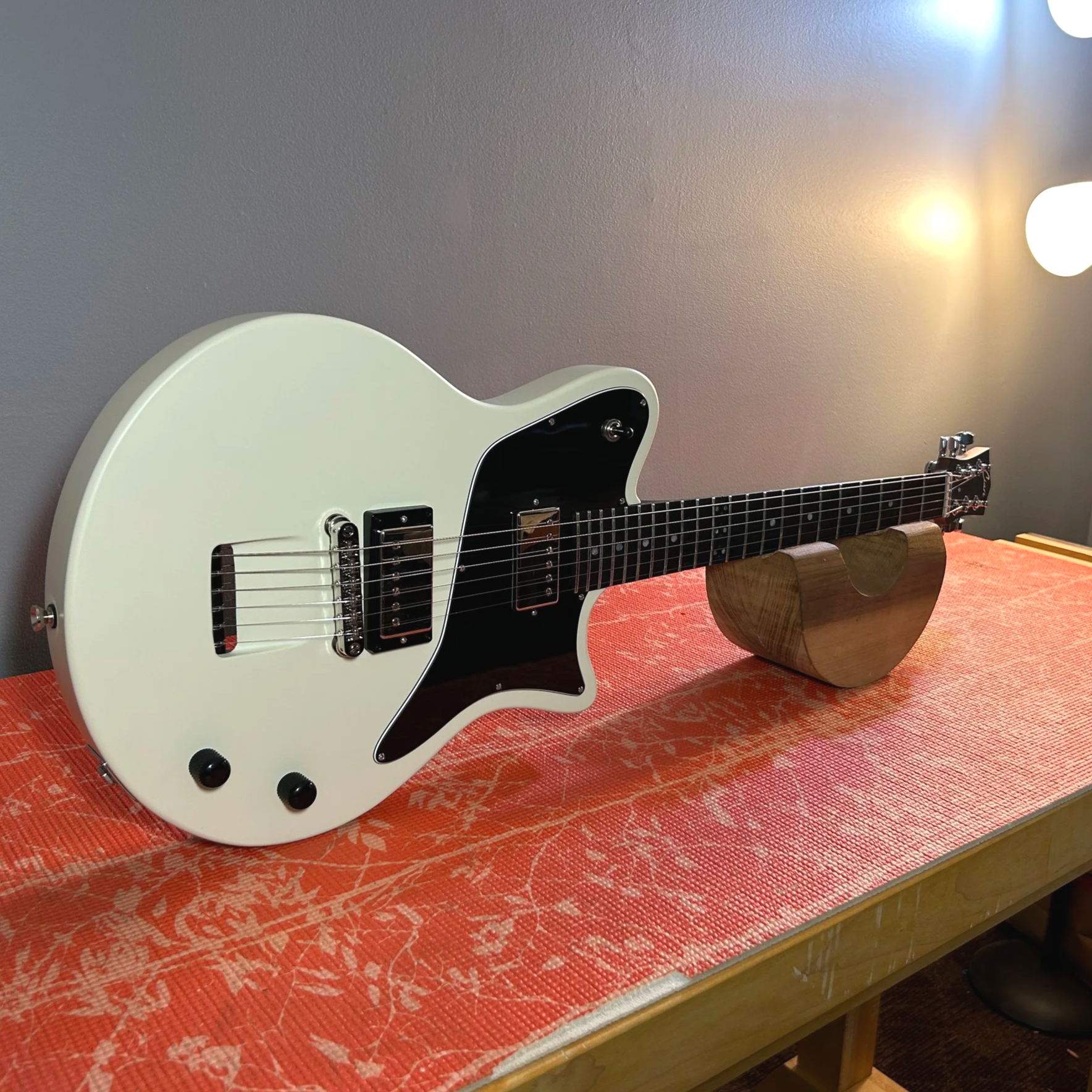
What an SHL Premium Setup Includes
Here’s a list of points addressed in each Setup:
Full inspection
Restring
Fret polishing and oiling of fret board
Nut slot recutting and polishing
Tightening of all hardware
Oiling of tuning gears
Truss rod adjustment
String height adjustment at nut and bridge
String length compensation on adjustable saddles
Pickup and tremolo balancing
Cleaning of electronics, neck and body
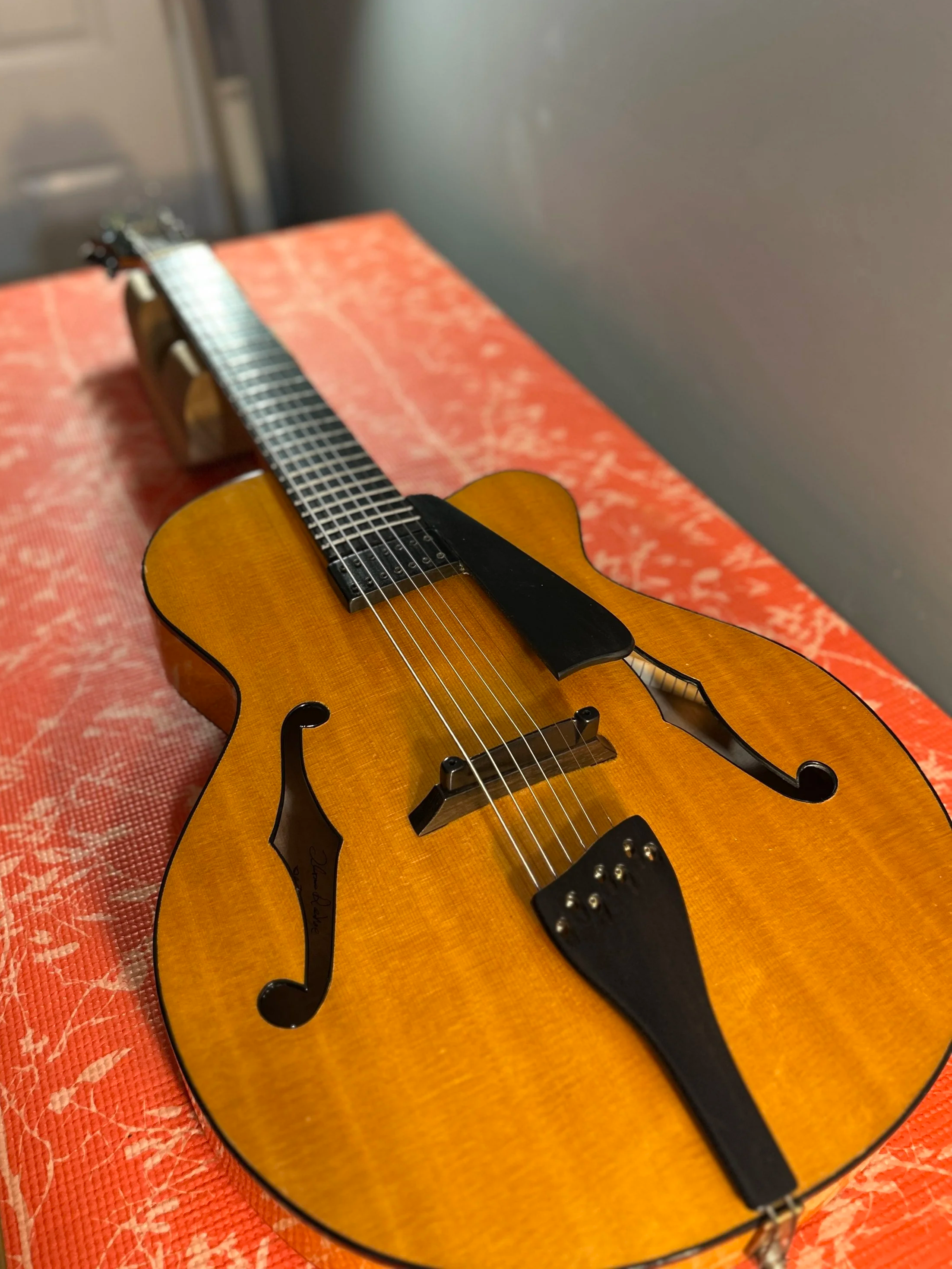
Additional Services
While a Premium Setup will take care of most issues connected to performance and playability it will not solve every single problem your guitar might have.
Similar to when you bring your car to a mechanic, an oil change and tire rotation might not do the trick if your car has a cracked chassis or major transmission issues.
Here’s a list of issues an SHL Premium Setup will not solve:
Major fret issues: Uneven frets, “fretsprouting”, deep scratches or indentations
Broken truss rods, stripped nuts, etc
Dead pickups, pots, caps or input jacks
Finish problems
Cracks, unglued braces and delaminations
Bridge lift
Saddle compensation on acoustic instruments
For a full list of services click here.

The Problems a Premium Setup Solves
-
“Relief” refers to the amount of neck bow or flex (mostly caused by string tension). In most modern instrument, neck relief can be adjusted by manipulating the truss rod.
Contrary to popular belief a neck usually shouldn’t be set completely straight, a certain amount of relief is needed to give the vibrating string clearance over the frets.
As with string height (which neck relief also influences) the goal is to find the sweet spot between too much or too little relief in order to achieve a balance between playability and performance.
Note: Not all instruments have adjustable trussrods. On certain vintage instrument and most classical / flamenco guitars neck relief needs to be adjusted with more time consuming and demanding techniques like fret leveling, and fingerboard resurfacing.
-
The term “action” refers to the distance between the bottom of each string and the top of the frets (generally measured at the 12th fret).
Both overly high or low action can cause issues: Too high and the instrument will be too hard to play and go out of tune when fretted. Too low and it will buzz excessively.
Finding the sweet spot between playability and performance is key. A properly set action is low enough to be comfortable and just high enough so the instrument can be played dynamically and meaningfully without excessive string buzz.
-
Many issues that lead to string buzz and mystery rattles can be addressed by manipulating neck relief, string height, nut slots and tightening of hardware.
While a Premium Setup covers all points mentioned above, sometimes string buzz is caused by other problems: Useated or overly worn frets, a faulty nut or saddle, internal brace issues, etc.
In those cases the solution could demand other services to be performed. Those include partial or full refrets, fret leveling and nut / saddle replacement or brace glue-ups, all of which are specific services and come at an additional cost.
-
Most players have experienced the frustration of meticulously tuning the instrument on all open strings, only to find out it gets thrown out of tune on certain chords or specific neck positions.
Intonation refers to the instrument’s ability to play in tune on all open strings and fretted notes simultaniously.
Once the proper string height and neck relief is set, a process called “string-length compensation” is employed to achieve ideal intonation. It generally consists of a series of adjustments at the saddle to move its point of contact with the string, effectively changing the length of the string between the nut and saddle (i.e. the scale length).
Additionally, other systems of solving intonation issues, like saddle AND nut compensation, the “true temperament” fret system, and moveable / microtonal frets exist. In my experience, given there are no issues with fret, bridge or saddle placement, once a guitar is properly set up, compensating only the saddle brings the instrument as close to perfectly intonated as it can be.
For more information on intonation and string length compensation click here.
-
While intonation takes into account the guitar’s ability to “play true” both when open strings and fretted notes are being played, “tuning” refers to the instrument’s ability to maintain the proper pitch on all open strings over time.
As with intonation, many variables are at play here, and the solution must usually take all of them into account. Some common factors which may cause tuning issues include:
Old or deffective strings
String binding at nut, string tree or saddle
“Tuner slop”
Improper restringing
Saddle, nut, bridge or tremolo spring issues
Method of tuning
As with most services I provide, when addressing tuning issues my approach is to take the whole instrument (and its owner’s playing style and ability) into account in order to find a solution.
Often enough, a Premium Setup can solve tuning issues, but, at times, parts need to be replaced (nuts, saddles, tuning keys) in order to achieve tuning stability in certain instruments.
-
Many common issues associated with the intrument’s electronics can be solved with a Premium Setup:
“Scratchy” volume and tone pots
Crackling noises coming from the jack or pickup selector switch
Intermittent loss of signal from the guitar to the amp caused by “bad contact”
A Premium Setup, however, might not solve every electronic issue your instrument might have, but it can help rule out certain causes in order to get to the heart of the problem, which may include:
Faulty pickups
Bad wiring
Broken or worn-out components (pots, caps, switches)
Amp or cable problems
I do not service amplifiers, but do offer electronic services like replacing parts and rewiring at an additional cost.
-
Volume discrepancies between 2 or more pickups can be addressed with pickup height adjustments, a service included on a Premium Setup.
In other cases, where the issue is caused by improper wiring, pickup configuration incompatibilities, etc., diagnosis and potential solutions follow outside the scope of a Premium Setup and come at an additional cost.
-
Just like periodic visits to a dentist or a car mechanic, getting your instrument routinely assessed by a professional may expose issues that can become more expensive repairs in the future if not attended to.
The inspection and Setup processes give me a chance to thoroughly analyze your instrument and may bring to light the following problems:
Cracked or unglued internal braces
Stripped trussrod nuts
Overly worn out frets
Cracks on tops, back, sides, bridges or headstocks
Lifting bridges
Solving any of those issues goes beyond the scope of a Premium Setup and comes at an additional cost.
5 Signs Your Instrument Needs a Setup
It is hard to play at specific areas of the neck
1
The 2 most common causes here are improper neck relief and overly high action at nut or saddle.
It won’t stay in tune
2
The solution can often be the proper filing of nut slots, saddle polishing, restringing method or a simple string change.
Certain chords or notes won’t play in tune, but the instrument is tuned properly
3
A Premium Setup customizes intonation for your specific string gauge, brand and material as well as string height, neck relief and playing style.
Scratchy noises when turning volume / tone knobs, or selector switches
4
Electronic components often need inspecting, adjusting or cleaning.
Volume discrepancy between pickups
5
Pickup height adjustments can be made to adjust the volume of each pickup.

Get In Touch
Use the form or call 978-609-6140 to request a free estimate, ask questions or simply get in touch with comments or suggestions.
I will answer your message as soon as possible.